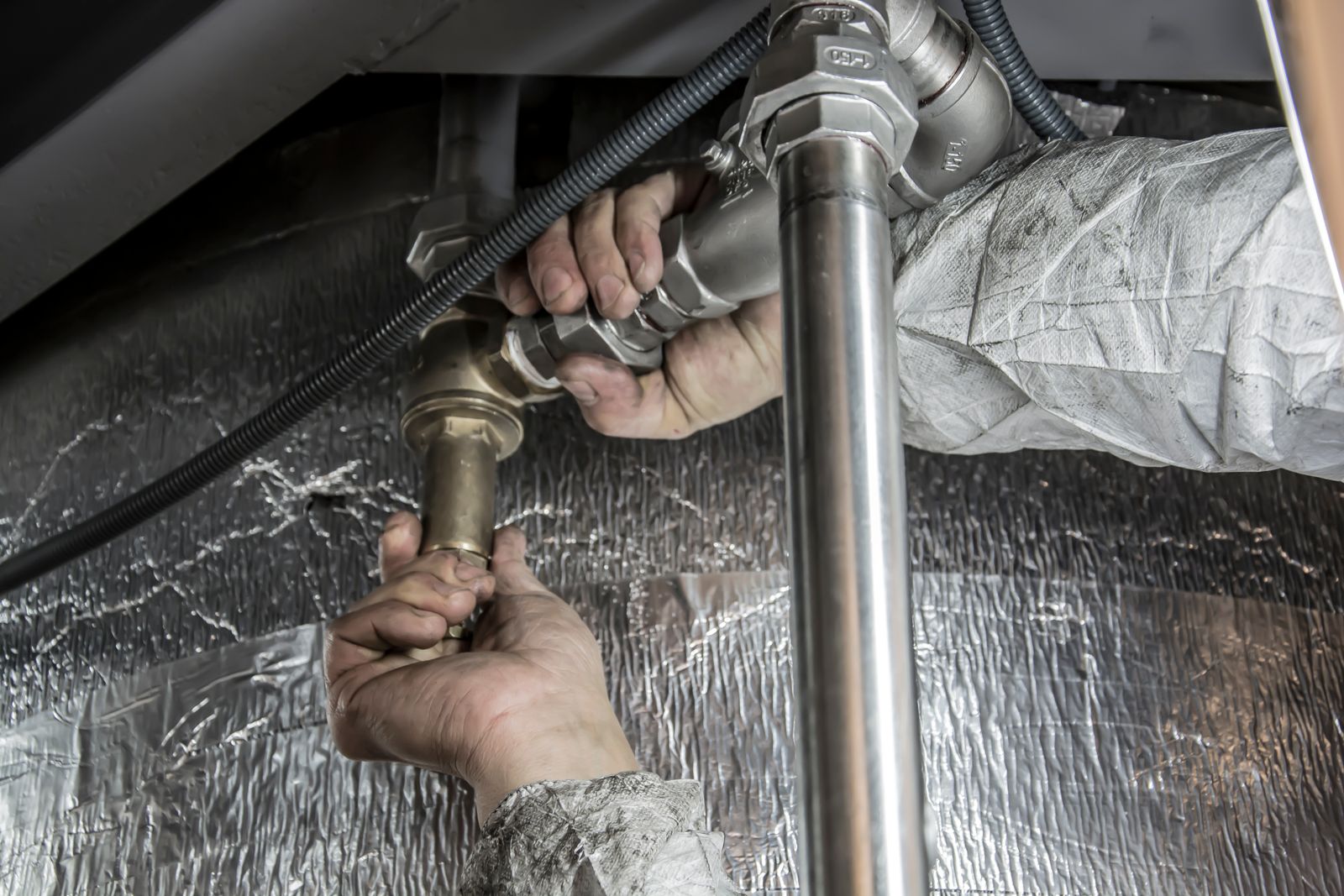
A kitchen drain that empties like it should.
Kitchen Sink Drain Cleaning in Tucson, AZ
A slow or backed-up kitchen sink is almost always a grease problem. Hot water carries grease down the line, it cools as it moves away from the sink, and it sticks to the pipe wall. Hard-water scale roughs up the inside of the pipe, so the grease grabs on faster. Layer by layer the branch line narrows until a load of food scraps finally blocks it. A cable punches a hole through the plug and restores flow, but the grease coating on the walls is still there — which is why the clog comes back in a few months. We clear the clog, then we tell you whether your line needs jetting to scrub the walls clean, or whether a cable is enough.
When You Need This
Signs You Need Kitchen Sink Cleaning
- Your kitchen sink drains slow or not at all.
- Water comes up into the other sink basin when one drains.
- The garbage disposer hums but water will not go down.
- You smell rotting food coming from the kitchen drain.
- You have a long kitchen waste line that clogs every few months.
- A plunger and a pot of boiling water have not fixed it.
The Real Scope
What Is Actually Included
Cable machine clearing
We run a cable machine through the kitchen branch line with a grease cutter head. The blade scrapes the buildup off the pipe wall and breaks through the clog, restoring flow.
P-trap and branch line access
We check the P-trap and the branch line under the sink first — a clog there clears in minutes without sending a cable further. If the clog is deeper, we access the branch line at the wall.
Flow verification
We run water down the sink after clearing and watch it carry away at full speed. If the drain is still slow, we are not done — a deeper clog or pipe narrowing is still in there.
Jetting recommendation when needed
If the camera or the cable shows hardened grease coating the whole branch line, we tell you jetting is the better long-term fix. We do not push it on a clog that cabling will handle.
Our Process
How We Do It
Check the P-trap first
A lot of kitchen clogs sit in the P-trap or the disposer outlet. We check there before running a cable into the wall. If the clog is right there, you are done in minutes for less money.
Cable the branch line
If the clog is deeper, we run a cable with a grease cutter through the branch line to the main stack. The blade scrapes the pipe wall and breaks through the grease and food buildup.
Verify flow
We run water and watch the sink empty at full speed. If it is still slow, the line has hardened grease further down or a narrowing we need to address with jetting.
Tell you how to prevent it
Grease is the cause of almost every kitchen clog. We tell you what not to put down the disposer and how to keep the line clear, so you are not calling us again in two months.
Tucson-Specific
Why kitchen drains clog in Tucson
Grease is the main culprit, and Tucson water makes it worse. When you run hot water and grease down the disposer, the grease cools as it moves away from the sink and sticks to the pipe wall. Hard-water scale roughs up the inside of the pipe, giving the grease more to grab onto. Layer by layer, the line narrows until a load of food scraps finally blocks it. A cable punches a hole, but the grease on the walls is still there, which is why the clog returns.
Long kitchen waste lines clog more often. Homes with the kitchen on the far side of the house from the main stack — common in ranch-style layouts across Tucson — have a longer run for grease to build up in. The longer the branch line, the more pipe wall there is to coat, and the slower the flow at the far end. If your kitchen sink clogs repeatedly, the length of the waste line is part of why.
Garbage disposers contribute. A disposer does not dissolve food — it chops it into small pieces that are supposed to wash down the line. Starchy foods like potato peels and pasta turn into a paste that sticks to grease on the pipe wall. Coffee grounds and eggshells settle in low spots. We can clear the clog, but we also tell you what to stop putting down the disposer so the line stays clear.
When grease has hardened along the whole branch line, a cable is a stopgap. The right fix is hydro jetting at 4,000 PSI, which scrubs the pipe wall clean and restores full flow diameter. We will tell you if your line is at that point, and we will not sell you jetting if a cable will handle the clog. The difference is whether the grease is a single plug or a coating along the whole run — and we can usually tell from how the cable behaves.
Honesty First
What We Do Not Do — And When We Will Tell You No
- We do not run a cable into the wall before checking the P-trap. A clog right under the sink clears in minutes for less money, and we start there.
- We do not push hydro jetting on a clog that cabling will fix. If the grease is a single plug, a cable handles it. We tell you when jetting is the right call and when it is overkill.
- We do not clear the clog and leave you to guess why it happened. Grease and disposer habits are the cause, and we tell you what to change.
- We do not declare the job done until the sink empties at full speed with the water running. A slow drain after we pack up means we are not finished.
Related Services
Drain Cleaning
We clear the full blockage, locate the line and find the cause, and tell you why it clogged so it does not happen again in four months.
Learn moreHydro Jetting
Jetting strips the pipe wall down to bare material — scale, grease, and small roots gone in one pass. We camera before and after so you see the difference.
Learn moreToilet & Shower Clearing
We clear the fixture, find out whether it is a local clog or a main line problem, and tell you which one so you are not snaking the wrong pipe.
Learn moreKitchen Sink Cleaning FAQ
Drain Backing Up Right Now? We Dispatch 24/7.
Same flat-rate pricing, seven days a week. No surprise charges.
Get Your Free Estimate
Same-day service available. We will call you back in under 15 minutes.
Get a Free Estimate — Same-Day Service Available
No obligation. We will call you back in under 15 minutes during business hours.
No obligation. We will call you back in under 15 minutes during business hours.